If you are searching for walkable living in Mount Pleasant, you need to be selective. The town’s overall average Walk Score is just 22, which means most of Mount Pleasant still functions as a car-oriented place. But a few pockets offer a very different experience, and two of the clearest examples are I’On and Old Village. If you want to understand where village-style living really works here, this guide will help you compare the feel, layout, and daily convenience of each area. Let’s dive in.
Why walkability in Mount Pleasant is localized
According to Walk Score, Mount Pleasant is not broadly walkable. That matters because buyers often assume a popular coastal town will naturally offer easy day-to-day walking.
In practice, the walkable experience is concentrated in a few specific areas rather than spread across the whole town. If walkability is high on your list, the real question is not just whether you want Mount Pleasant, but whether you want to live in the right few blocks.
I’On walkability at a glance
I’On is the more intentionally planned version of walkable neighborhood living. Its design follows a Traditional Neighborhood Design approach, with streets, homes, and civic spaces arranged to support walking, running, and biking rather than centering everything around the car.
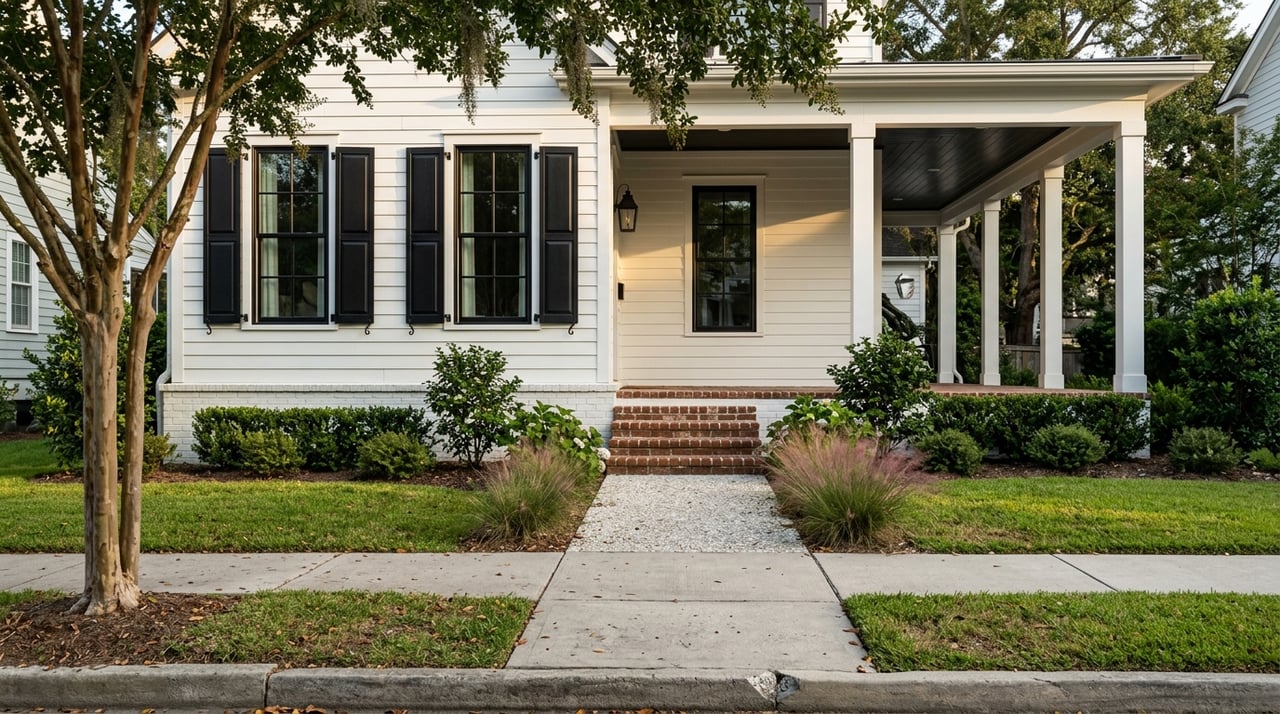
The neighborhood’s own architectural guidelines call for porch-forward buildings, defined build-to zones, and garage placement that stays visually secondary to the home. Those details shape the streetscape in a way that feels compact, orderly, and pedestrian-focused, not like a standard subdivision. You can review those design principles in the I’On architectural and landscape guidelines.
I’On streets and layout
I’On’s walkability comes from its internal organization as much as from any one destination. Community materials describe six boroughs centered on civic spaces, which helps explain why the neighborhood feels connected on foot.
Instead of relying on one main commercial corridor, I’On functions through a network of streets, paths, and public spaces. That means your experience of the neighborhood is often defined by the route itself, not just the place you are walking to.
I’On shops and daily stops
A walkable neighborhood usually needs at least a small retail center, and I’On has one. Square Onion sits on the square at 18 Resolute Lane, and community materials point to a cluster of neighborhood services around the center as well.
That is an important distinction for buyers. I’On is not purely residential. It offers a neighborhood-scale commercial core that supports the idea of daily life happening close to home.
I’On parks and public spaces
I’On also stands out for its community amenities. Official materials highlight paths, parks, a community garden, lakes, docks, and amphitheater space, while the neighborhood newsletter references spaces like Westlake Amphitheatre, Eastlake Field, and Maybank Green for recurring events.
The same materials note that the finished trail and sidewalk network will total more than 12 miles. If you enjoy walking for exercise or prefer a neighborhood where public space is part of everyday life, that is a major part of I’On’s appeal. You can explore more in the I’On community newsletter.
What I’On housing feels like
For many buyers, I’On’s housing stock is about design character more than age. The neighborhood is defined by architectural review, porch depth, lot type, rear service areas, and a strong visual framework.
The result is a character-rich environment with a more controlled appearance. If you want a walkable setting with consistent design language and a planned village feel, I’On is often the stronger fit.
Old Village walkability at a glance
Old Village offers a different version of walkability. Where I’On feels planned and design-managed, Old Village feels older, more layered, and more historically rooted.
The Town of Mount Pleasant describes Old Village as a district with special character shaped by its oldest streets, shade trees, variable setbacks, and homes along harbor bluffs. Current design guidelines apply across the district, whether a building is historic or non-historic, which helps preserve the area’s overall streetscape. You can see that framework in the Old Village Historic District guidelines.
Old Village streets and pattern
Old Village has a connected grid that supports walking in a practical way. The town’s Old Village 5K route runs through streets including Middle, Pitt, Center, Bennett, Venning, Hibben, Morrison, King, Bank, Ferry, McCants, and McCormick, which gives you a useful picture of how the neighborhood links together.
That matters because walkability is not only about having a pretty street. It is also about whether streets connect well enough for walking to feel useful and natural.
Old Village shops and dining
Old Village has a compact commercial strip that feels neighborhood-based rather than corridor-based. The Old Village District highlights independent businesses on Pitt Street, including Pitt Street Pharmacy, Rudi’s Old Village Wine Shop, Out of Hand, and Old Village Gym, along with Post House at 101 Pitt Street.
For buyers, that mix creates a small but meaningful daily-use cluster. You are not getting a large retail district, but you are getting a true neighborhood center with local businesses woven into the area.
Old Village parks and waterfront access
Public space is a major part of Old Village’s appeal. The district highlights Pitt Street Bridge as a local amenity for walking, biking, fishing, picnicking, and kayaking, while Alhambra Hall and the harbor edge add more places to spend time outdoors.
The same source notes that streets here are used as active pedestrian routes, not just scenic drives. A 2025 micromobility project along Pitt Street also improved separation between motorized and non-motorized users, reinforcing the area’s function as a walkable district.
What Old Village housing feels like
Old Village includes a mix of older and newer buildings, including historic houses, smaller homes, larger homes, and infill construction. Because the district is subject to design review, exterior changes and new construction are expected to remain harmonious with the surrounding block and streetscape.
For you as a buyer, that often means more mature trees, more architectural age, and a more preservation-oriented setting. It can also mean a different level of review and constraint compared with neighborhoods that are less historically regulated.
I’On vs. Old Village
Both neighborhoods offer a more walkable lifestyle than Mount Pleasant overall, but they deliver it in different ways. Your best choice depends on whether you prefer a planned village environment or a historically layered neighborhood with a stronger sense of age and preservation.
| Feature | I’On | Old Village |
|---|---|---|
| Overall feel | Planned, design-managed village living | Historic, character-rich district |
| Walkability pattern | Internal network of streets, paths, and civic spaces | Connected street grid with a compact commercial strip |
| Retail | Small neighborhood-scale core around the square | Independent businesses centered on Pitt Street |
| Public spaces | Parks, lakes, docks, amphitheater, community paths | Pitt Street Bridge, Alhambra Hall, harbor edge |
| Housing character | Newer character-driven homes with strong design controls | Mix of historic and newer homes with preservation review |
Beyond I’On and Old Village
It is also helpful to think about how the walkable zone expands beyond the best-known anchors. In Old Village, the 5K route and the historical marker walk suggest that walkability extends into nearby civic streets, not just the waterfront edge.
In I’On, the neighborhood’s design means the internal circulation is part of the value. The walkable experience is created by the layout of the community itself, not simply by being close to one retail node.
That is why buyers relocating to Mount Pleasant should look closely at block-by-block context. In this market, walkability is highly localized, so small location differences can have a big impact on daily life.
Which walkable Mount Pleasant area fits you?
If you want a neighborhood that feels intentionally built around front porches, civic spaces, and a structured village plan, I’On may be the better match. If you are drawn to mature streets, historic character, and a compact neighborhood business district with waterfront access, Old Village may feel more natural.
Neither option represents Mount Pleasant as a whole. They are exceptions to the broader car-oriented pattern, which is exactly why they stand out.
If you are weighing I’On, Old Village, or other walkable pockets in the Charleston area, working with a local advisor can help you compare not just home prices, but also street pattern, design constraints, and how daily life actually functions from one block to the next. To talk through your options, connect with PRL Consulting Group, LLC.
FAQs
What makes I’On one of the most walkable neighborhoods in Mount Pleasant?
- I’On stands out because it was intentionally planned around streets, civic spaces, paths, and a neighborhood-scale retail core, creating a more pedestrian-friendly experience than most of Mount Pleasant.
What makes Old Village walkable for homebuyers in Mount Pleasant?
- Old Village combines a connected street grid, a compact Pitt Street business district, and public spaces like Pitt Street Bridge and Alhambra Hall, which support walking as part of everyday life.
How walkable is Mount Pleasant overall compared with I’On and Old Village?
- Mount Pleasant’s average Walk Score is 22, so the town is generally car-oriented, while I’On and Old Village are more walkable pockets within that broader pattern.
What is the main difference between I’On and Old Village housing styles?
- I’On is known for newer character-rich homes shaped by design controls, while Old Village includes a mix of historic and newer homes within a preservation-focused district.
Should you focus on specific blocks if walkability matters in Mount Pleasant?
- Yes, because walkability in Mount Pleasant is localized, the practical value often comes from choosing the right streets and blocks rather than just the right town or ZIP code.