The live oaks on Venning haven't noticed the calendar turned. The shrimp boats still leave Shem Creek before the sun clears the marsh. But if you've walked Pitt Street this year, you already know the village is quietly under new management in a few key spots, and this fall is the first full season where you can taste the difference.
Here is what shifted, what stayed, and how a resident's autumn actually maps onto the changes.
What actually moved on Pitt Street this year
The biggest name to change hands was Post House. Ben and Kate Towill's Basic Projects, who spent six years turning the 1896 building at 101 Pitt into the boutique inn and tavern locals now think of as a village fixture, sold operations to Indigo Road Hospitality Group in a deal that closed May 1, 2025. Indigo Road, the Charleston-based group behind Indaco, O-Ku, and Oak Steakhouse, is running daily operations, with the group's president publicly committing to keep the restaurant essentially as it has been and offering current staff their same roles. If you dine there this fall and the room feels familiar, that is intentional.
The same announcement carried a second piece of news that matters more for the next twelve months than for tonight's reservation. Indigo Road will also handle hospitality at the forthcoming Seabird Inn, a boutique hotel taking shape at the corner of Hibben and Whilden under development partner Jeremy Graves. That corner has been in slow motion for a while. Once it opens, the village will have two operating inns within a five-minute walk, both run by the same hospitality group. That is a real change to how weekend foot traffic on Pitt behaves, and it is worth watching how the residential blocks between them absorb it.
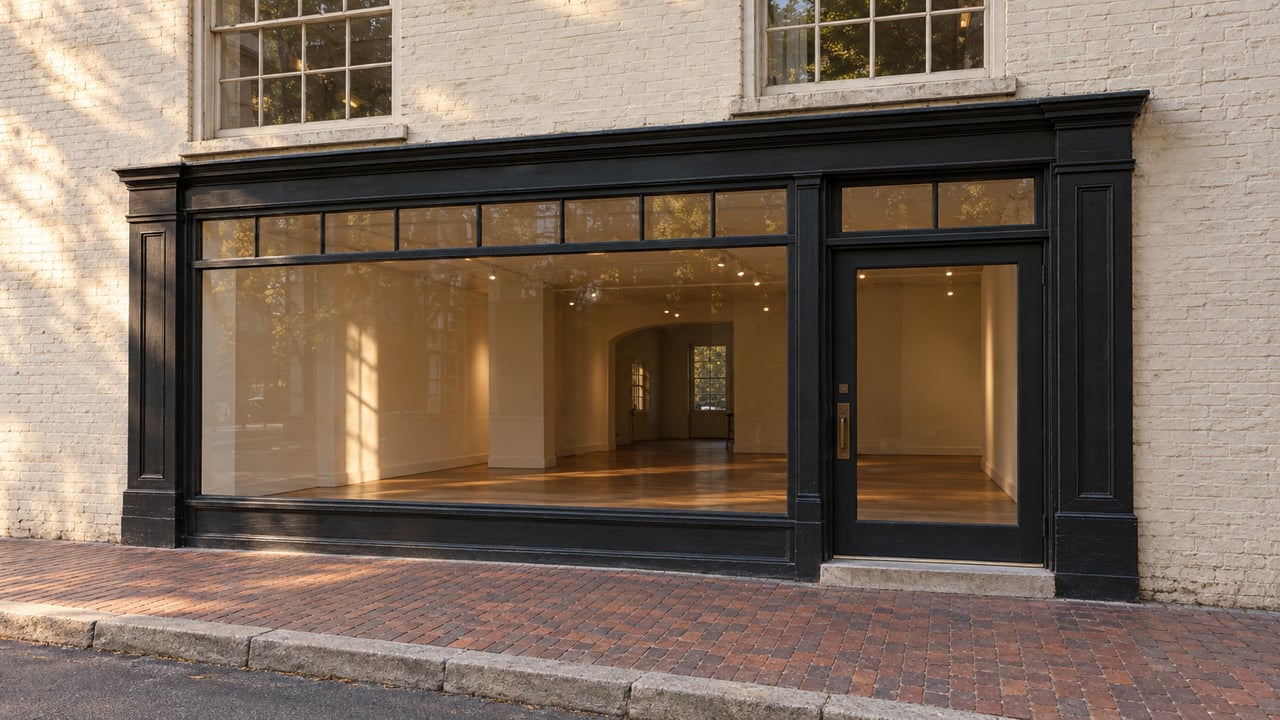
A few doors up, 123 Pitt Street welcomed Studio Shoppe Charleston, a seven-woman collective offering interior design, art, styling, and event planning under one roof. The concept relocated from King Street, which is the more interesting fact. For most of the last decade, the flow was the other direction: Old Village businesses opening downtown outposts. A downtown design studio picking Pitt as its home address is a small but real reversal.
Two doors down at 115 Pitt, Rudi's Old Village Wine Shop has been marking its courtyard as the neighborhood's default happy-hour venue this year, and the courtyard behind 123 Pitt has become the de facto event space when Alhambra Hall is booked.
The calendar those changes had to work around
None of the new operators are trying to remake the village calendar. They are threading into it. If you already live here, these are the fixed points your fall is planned around, and they are the same as last year:
- Mount Pleasant Farmers Market, Tuesday afternoons from 3:30 to 7:00 p.m. through the fall, with live music each week and free parking. September 8 and September 15 are on the schedule so far, and the market continues into October.
- Dancing on the Cooper, September 11, 2026, at the Mount Pleasant Pier at Memorial Waterfront Park, with the Cooper River Band under the Ravenel.
- Old Village Harbor 5K, Saturday, November 14, 2026, 8:30 a.m. to noon. The course still runs the residential streets you drive every day, which is either charming or an inconvenience depending on whether you're running it.
- Mount Pleasant Holiday Market & Craft Show, December 12, 2026, 11:00 a.m. to 4:00 p.m.
- Christmas Light Parade, December 13, 2026, 5:30 to 8:00 p.m., up West Coleman.
The through-line: the town's official rhythm still uses Alhambra Hall, the Waterfront Park pier, and Coleman as its stages. Pitt Street is the commercial spine, not the event stage, and the new operators seem to understand that.
The corners that refused to change
Any honest read of the village this fall has to include what didn't move, because that is the part that tells you what the neighborhood is actually protecting.
Pitt Street Pharmacy is still the pharmacy, and the soda fountain counter is still scarred with the names kids and teens have carved into it for years. If you have out-of-town guests this fall, this is still where you take them for a root beer float before the walk to the bridge. Out of Hand, the gift emporium and florist that has anchored the block for decades, is still owned and operated the way it has been. The Sunday Sundae Event at the pharmacy, 3 to 5 p.m., is still the standing kids' outing.
The Pitt Street Bridge itself, originally the Cove Inlet or Gadsden's Bridge and once the only span between the mainland and Sullivan's Island, is still where residents walk their dogs at golden hour. It is still a pier, not a road. That has not changed, and it is worth stating plainly, because the temptation to "improve" a waterfront easement is a fact of coastal town life.
The village keeps its ownership by refusing to become a destination. The new operators seem to know that is the whole deal.
What the pattern says if you actually live here
Take the three commercial changes together and a picture forms. A well-run hospitality group buys the anchor restaurant and pledges continuity. A second inn is coming from the same operator two blocks over. A downtown design studio moves in on Pitt. None of these are speculative flips. All three are operators betting on the village staying exactly what it is.
That matters for a few practical reasons.
First, if you own here, the operational quality of your commercial neighbors has just gone up. A Michelin Key-holding tavern under a group with a deep bench is different from a solo operator's second act, in both directions. Post House earned a Michelin Key during the Towill years for what the guide called its unique and memorable setting, and Indigo Road inherits that recognition and the pressure that comes with it.
Second, the Seabird Inn's arrival will change parking and evening foot traffic on Hibben and Whilden. It is worth paying attention to how the town handles the transition. If you live within three blocks of that corner, the coming twelve months are the ones to watch.
Third, and this is the quieter point: the new operators are keeping the seven-room, small-inn scale that the village has always insisted on. Nobody is building a hundred-key hotel here. The commercial fabric is being reinforced at roughly its existing weight, which is unusual in coastal South Carolina right now.
A resident's honest fall Saturday
If you moved here in the last two years and haven't fully settled into a rhythm, this is the version that most of your neighbors are actually living:
- Early market run down Simmons before the heat.
- Coffee somewhere on Pitt, then a slow lap through Out of Hand for whatever seasonal thing they've put in the window.
- Farmers market at Moultrie Middle Tuesday afternoons if the week allows.
- Sunset walk out to the Pitt Street Bridge with the dog, timed to hit the water at golden hour.
- Dinner at Post House on a weeknight when reservations are easier, or Rudi's courtyard when you'd rather stand around with a glass.
- If it's a race weekend in November, park the car Friday night and walk everywhere Saturday.
None of this is new. That is the point. The village worth living in is the one that resisted the update.
A note on what this means if you're thinking about the market
The commercial reinvestment on Pitt Street changes the qualitative case for owning in the Old Village, but the residential inventory is what it always was: tight, historic-district constrained, and priced by proximity to the harbor and the bridge. If you own here and want to understand how the Seabird Inn's opening or the Post House transition might read to a future buyer, or if you're a resident thinking about a move within the village, that is the kind of question worth having a real conversation about with someone who knows the block.
PRL Consulting Group works with owner-occupants across the Old Village and greater Mount Pleasant. Request a market valuation or project consultation when you're ready for a specific, block-level read on your home.